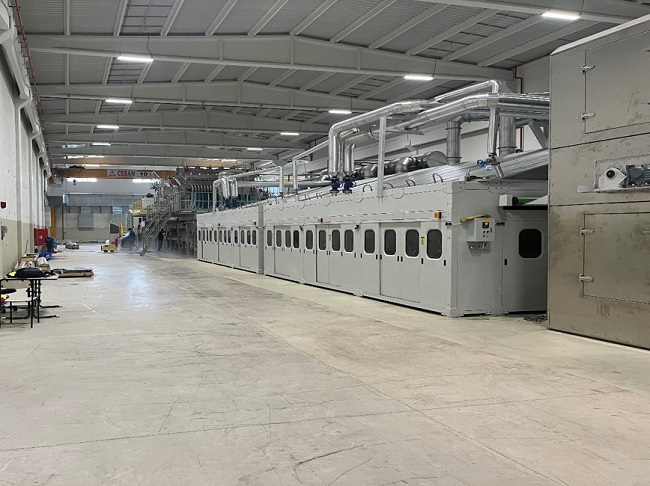
CTMTC: The leader in the wet spunlace field, empowering a new green nonwoven ecosystem
At the critical stage of the global nonwoven fabric industry’s transformation towards green sustainability and high added value, wet spunlace technology is becoming one of the core paths driving industry upgrading, thanks to its outstanding material adaptability and remarkable environmental protection features. As one of the first domestic enterprises to lay out in this field, CTMTC not only has the R&D and manufacturing capabilities of wet spunlace complete lines, but also can provide a complete solution covering dry and composite processes (CP, SP, CPC). Relying on our independent core equipment and the integration of the world’s top components, we provide customers with full-chain services from process design, full-line delivery to production support, and are committed to helping customers precisely match market demands and achieve a value leap from fibers to the terminal.
The wet spunlace process begins with mixing wood pulp, polyester, viscose and other fiber raw materials with water to form a slurry. After being diluted and homogenized, the slurry is dehydrated through the forming net to form a preliminary fiber web. Subsequently, the fiber web is transferred to the spunlace area and is subjected to vertical ejection by multiple rows of high-pressure fine water needles. Under the puncture and rebound effect of the water needle, the fibers are fully entangled and reinforced with each other, thereby obtaining strength. Finally, after an efficient vacuum dehydration and drying process, a wet-spunlace non-woven fabric with a tight structure and soft touch is produced.
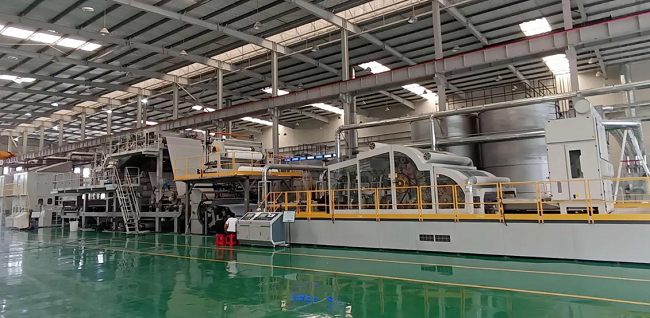
Hardcore Technology: Decoding the Production Code of Wet Spunlace
The wet spunlace process is a unique technique that evenly disperses, shapes and consolidates fibers in water. With a profound understanding of the process, CTMTC has established a full-process standardized system from raw material handling to finished product winding, slitting and packaging. The specific process and core equipment are as follows:
I. Complete production process: Precise transformation from fiber to finished product
1. Raw material preparation and dispersion: Add various fibers such as wood pulp, polyester, viscose, absorbent cotton, and PP into the hydraulic pulper according to the formula, and thoroughly disperse them in water to form a uniform fiber suspension slurry.
2. Wet forming: The slurry is evenly spread on the high-speed running forming screen through the slurry box, and a wet fiber web is rapidly formed through vacuum dewatering. This process does not require dry carding and is particularly adept at processing ultra-fine and ultra-short fibers, achieving high uniformity in web formation.
3. Spunlace entanglement: The wet fiber mesh enters the spunlace area and is subjected to vertical ejection from multiple rows of high-pressure fine water needles from the precision spunlace heads. The water needle penetrates the fiber web, driving the fibers to move in three dimensions and entangle with each other, thereby endowing the material with the required physical strength and structural integrity. This step is the core link that determines the product’s weight, hand feel and strength.
4. Post-treatment and winding: The wet fabric blanks after entanglement are subjected to high-efficiency vacuum dehydration and hot air drying (or drying in a drying cylinder) to remove moisture. If necessary, they undergo surface treatments such as calendering. Finally, they are wound into finished fabric rolls by a winding machine.
Ii. Core Process Analysis: Five Key Steps of Wet Spunlace
The essence of the wet spunlace process is to use water as the medium and physically form and consolidate fibers into a web. The entire process can be condensed into four core links, and CTMTC’s solution lies in the precise control and efficient integration of each link.
1. Pulping: Uniform dispersion of fibers
Dry fiber raw materials are strongly dispersed into individual fibers in a hydraulic pulper to form slurry. After dilution, concentration adjustment and precise filtration, the slurry becomes a suspension with stable concentration and no impurities, which is the basis for ensuring the uniformity of the product.
2. Web formation: From slurry to fiber web
The uniform slurry is precisely and smoothly spread onto the mobile forming net through the slurry flow box. Under the gradient suction of the vacuum dehydration device, water is rapidly removed, and fibers deposit on the mesh surface, forming a continuous wet-state fiber mesh with fibers randomly arranged in three dimensions. This is the fundamental reason why wet-process products possess isotropy (consistent performance in both longitudinal and transverse directions) and high uniformity.
3. Consolidation: Spunlace entanglement
The wet fiber mesh enters the core consolidation zone. High-pressure water forms dense water needles through the micro-holes on the water nozzles and vertically penetrates the fiber mesh. The impact force of the water needle drives the fibers to shift and flip, and forms a reflected water flow on the supporting net curtain below, promoting the fibers to interweave and connect with each other, thus entangling into a solid whole under pure physical action. The tightness, hand feel and strength of the product can be precisely regulated through multiple water spines.
4. Finishing: Drying and shaping
The wet cloth blanks after entanglement are subjected to high-efficiency vacuum dehydration and then sent to the drying system (commonly the hot air penetration type) to remove residual moisture and achieve shaping. Subsequently, surface treatments such as calendering can be carried out as required, and finally, the product is wound up by a winding machine.
5. System Assurance: Water Circulation and Control
The process water is collected, filtered and largely reused by a closed-loop white water system, achieving water conservation and environmental protection. The entire production line is centrally monitored and automatically adjusted by a central control system to ensure the stability of parameters at each link and guarantee the quality and efficiency of continuous production.
In summary, CTMTC delivers a proven complete process capability and equipment system that can stably achieve the transition from fibers to high-quality fabric rolls.
Iii. Diversified Applications: Driving Industrial Upgrading through material Innovation
Based on the mature process of the CTMTC Wet-laid + Spunlace production line, this technology mainly focuses on niche markets that have high standards for the uniformity of fiber distribution, material purity and sustainability. Our solution combines the advantages of pulp and short fibers to provide core materials for the following three cutting-edge fields.
1. Environmental protection and dispersible field: Responding to the global trend of “replacing plastic with paper”
The most distinctive application direction of wet spunlace technology. Our production line is specially designed for processing short fibers and is particularly suitable for manufacturing dispersible materials with wood pulp fibers as the main structure.
Core products: Flushable wet toilet paper, eco-friendly personal cleaning wipes.
Process and raw materials: Wood pulp (2.5-3mm in length) is mainly used, and a small amount of Lyocell or viscose staple fiber (about 10mm) can be mixed to enhance wet strength. The highly uniform and non-directional fiber structure formed by wet web-forming ensures that the product is strong and tough during use and can be quickly hydraulically dispersed in the toilet.
Capacity guarantee: Our dedicated production line can achieve high-speed production (up to 150m/min), providing a capacity foundation for large-scale entry into the consumer market.
2. High-performance wiping field: Creating a balance between strength and functionality
Through the online lamination of wet web-forming layers with other materials, we are able to produce industrial-grade and commercial-grade wiping materials that meet the requirements of demanding application scenarios.
SP type composite material: Wet-process wood pulp fiber web is laminated online with a layer of prefabricated spunbond nonwoven fabric and reinforced by water jet bonding. This structure endows the material with extremely high dry and wet strength as well as wear resistance, while retaining the excellent liquid absorption and dust holding capabilities of the wood pulp layer. It is an ideal choice for industrial heavy cleaning, professional kitchen wiping, and hotel cleaning.
CP type composite material: It combines a wet-process wood pulp web with a layer of dry-carded PET, viscose or cotton staple web. The finished product combines the fluffiness and softness of short-fiber mesh with the uniformity and fineness of wood pulp mesh. It absorbs liquid quickly and has a good hand feel, making it suitable for high-end home wiping, personal care wipes and mask base materials.
3. Special medical and precision fields: Meet the requirements of high uniformity and low chip shedding
The inherent uniformity and purity advantages of wet processes make them irreplaceable in some medical and high-precision application scenarios.
Medical materials: Wet-process spunlace fabric has an extremely low fiber shedding rate and uniform texture. It can be used as the base material for high-end medical dressings, packaging materials for precision instruments, or as the basic material for low-shedding disinfection wipes. Through raw material and process control, specific requirements for microbial barrier and liquid management can be met.
Precision wiping: For applications with extremely high cleanliness requirements such as optical lenses, electronic displays, and laboratory instruments, non-woven fabrics produced from superfine fibers through wet processes feature no scratches, high adsorption, and extremely low particle release.
The wet spunlace production line of CTMTC is not a general-purpose device, but a professional solution designed to tackle specific market challenges. It precisely serves the environmental protection demands for biodegradability, the high-performance requirements for composite structures, and the special demands with extreme requirements for the uniformity and purity of materials. What we deliver is not only the production line, but also the pass and technical support to enter these high-value-added niche markets.
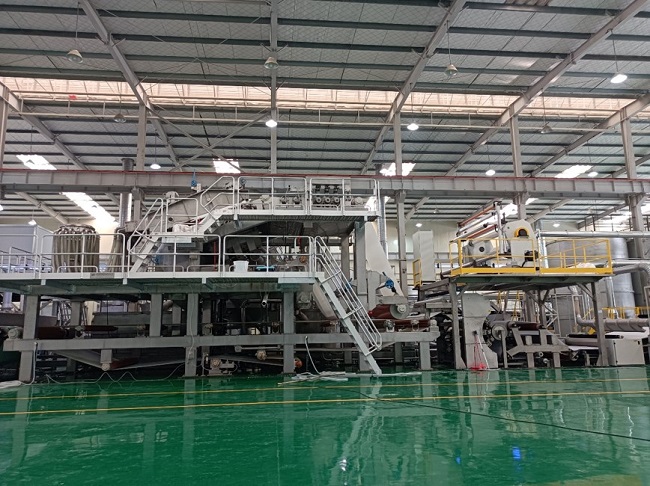
Iv. Market Structure and Growth Drivers
Driven by the dual forces of global sustainable development and the policy of “replacing plastic with paper” as well as consumption, the market for wet-process spunlace nonwovens is on a clear upward trajectory. The core driving force for its growth comes from
1. Environmental protection regulations and consumption upgrade: The increasingly strict restrictions on disposable plastic products in various countries have driven a strong demand for biodegradable and dispersible nonwoven materials. Wet spunlace technology, with its natural fiber compatibility, has become a key process to meet this demand.
2. Continuous expansion of application scenarios: While traditional advantageous fields (such as high-end medical dressings and wiping materials) maintain stable growth, emerging applications like flushable hygiene products, high-performance composite wiping materials, and special industrial substrates are constantly opening up new market Spaces and becoming important engines for industry growth.
3. Regionalization and upgrading demands of supply chains: Changes in the global supply chain landscape have highlighted the need for local production capacity construction around major consumer markets. Meanwhile, the existing production lines have an urgent need for intelligent upgrades to enhance efficiency and reduce energy consumption.
As a provider of equipment and solutions that has been deeply involved in this field for decades, CTMTC has always focused on the above-mentioned market trends for technological research and development. Our one-stop solution for disintegrable materials helps customers enter the high-growth environmental protection market in compliance. Our intelligent and low-energy consumption production line design directly addresses the core pain points for customers to enhance their competitiveness and achieve sustainable development, providing a solid technical guarantee for them to seize industry opportunities.
If you are interested in CTMTC’s business areas, cooperation models or service contents, and are eager to explore more cooperation possibilities, please feel free to contact us at any time!